Unlocking Your DNA: Tailoring Your Diet to Your Ancestry
- Liliana Kotval
- Mar 2
- 3 min read

Updated: Mar 14
Why look towards fad diets when trying to achieve ideal health when our DNA has the answer?
By. Liliana Kotval
Our DNA is our own unique genetic code that not only contains the instructions for our own bodies, but also carries the evolutionary story of our predecessors and all their passed-down traits. Over thousands of years, our ancestors’ metabolisms adapted to the local, available food sources. They developed certain enzymes that aid in the digestion of particular food groups. This explains why many people today may have food intolerances to those foods that were not customary in the diet of their ancestors. |

This topic is especially relevant nowadays, where millions of people migrate around the world annually, often living in places with local cuisine much different to that of their ancestors. By knowing your own ancestry, you can better understand potential risks of food intolerances and diseases.
For instance, why do those of Asian descent get an alcohol flush reaction when drinking alcohol, whereas those of European descent do not? Or, why are those of European descent less likely to develop a lactose intolerance than those of Mesoamerican descent?
The answer lies in special genes: DRAG genes (diet-related adaptive genes). DRAG genes are associated with chronic disorders in carriers of the adaptive alleles due to changes in dietary and lifestyle patterns in recent times.
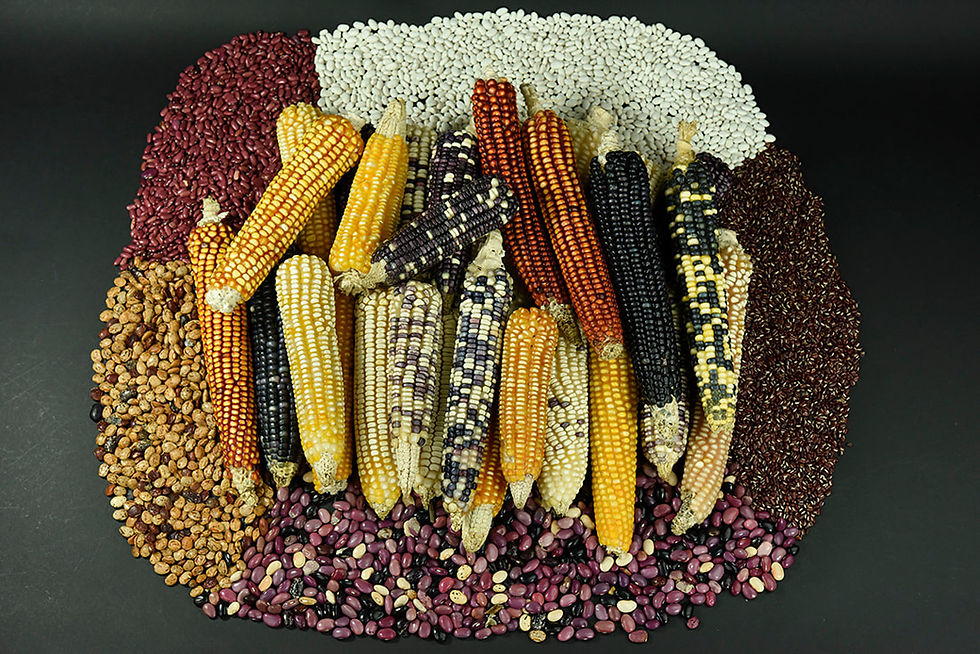
Research done on the Mesoamerican population in Mexico found higher amounts of the AMY1 and MTHFR DRAGS genes associated with the intake of leafy greens, maize, beans, and starches. Since Mesoamericans did not have access to dairy from cows, goats, and sheep (since these animals are native to Europe and did not appear in Mesoamerica until after the Columbian exchange), the LCT DRAG gene, which provides instructions for creating the lactase enzyme responsible for digesting lactose, the sugar found in milk and other dairy products, did not develop as predominantly as it did in European populations. As a result, 66% of Mexico’s population is lactose intolerant compared to only 18% of Europe’s. Another common dietary disease in the Mexican population is non-alcoholic fatty liver (NAFL) due to the accumulation of fats that the body cannot properly digest (including dairy fats), which increase the risk of type 2 diabetes.
Furthermore, with regards to alcohol flush, we can reference the historical water purification processes in both Asia and Europe. In Europe, water was purified via distillation and alcohol production. In Asia, the water was boiled and made into teas. As a result, many of Asian descent did not develop the enzyme aldehyde dehydrogenase (ALDH) which metabolizes the enzyme alcohol dehydrogenase (ADH). Without the ALDH enzyme, the alcohol is converted into acetaldehyde, a toxic molecule that causes the release of histamines and results in flushing of the face, among other uncomfortable symptoms. The flushing may even increase the risk of developing esophageal cancer.

See the chart below that highlights some DRAG genes associated with the functioning of a certain encoding protein, resulting in a metabolic effect. Take for instance the APOE DRAG gene found in Sub-Saharans as a result of their diets low in cholesterol saturated fat, leading to more fat storage. Europeans, on the other hand, have had a diet rich in animal products, thus more cholesterol and saturated fats, and have better metabolization of such fats.

If you would like to interpret your own metabolism and how certain foods can impact your health, first identify your ancestral origins and the types of foods that have been historically eaten there. Did your ancestors have a diet rich in starchy carbohydrates like in Asia or Mesoamerica? Or a diet rich in protein and fat like in Europe? Are you at risk of disease from lactose intolerance due to your ancestors’ lack of access to dairy? This and more can be answered with a simple genetic test, and you will be on your way to better shaping your own personalized diet.


Comments